Nigeria’s e-commerce industry continues to experience remarkable growth, driven by increased internet penetration, smartphone adoption, digital payment solutions, and changing consumer behaviour. More entrepreneurs are launching online stores, while established businesses are expanding their digital presence to reach customers across the country and beyond.
However, as sales increase, many businesses discover that growth comes with new operational challenges. Managing inventory, processing orders, coordinating deliveries, handling returns, and meeting customer expectations can quickly become overwhelming.
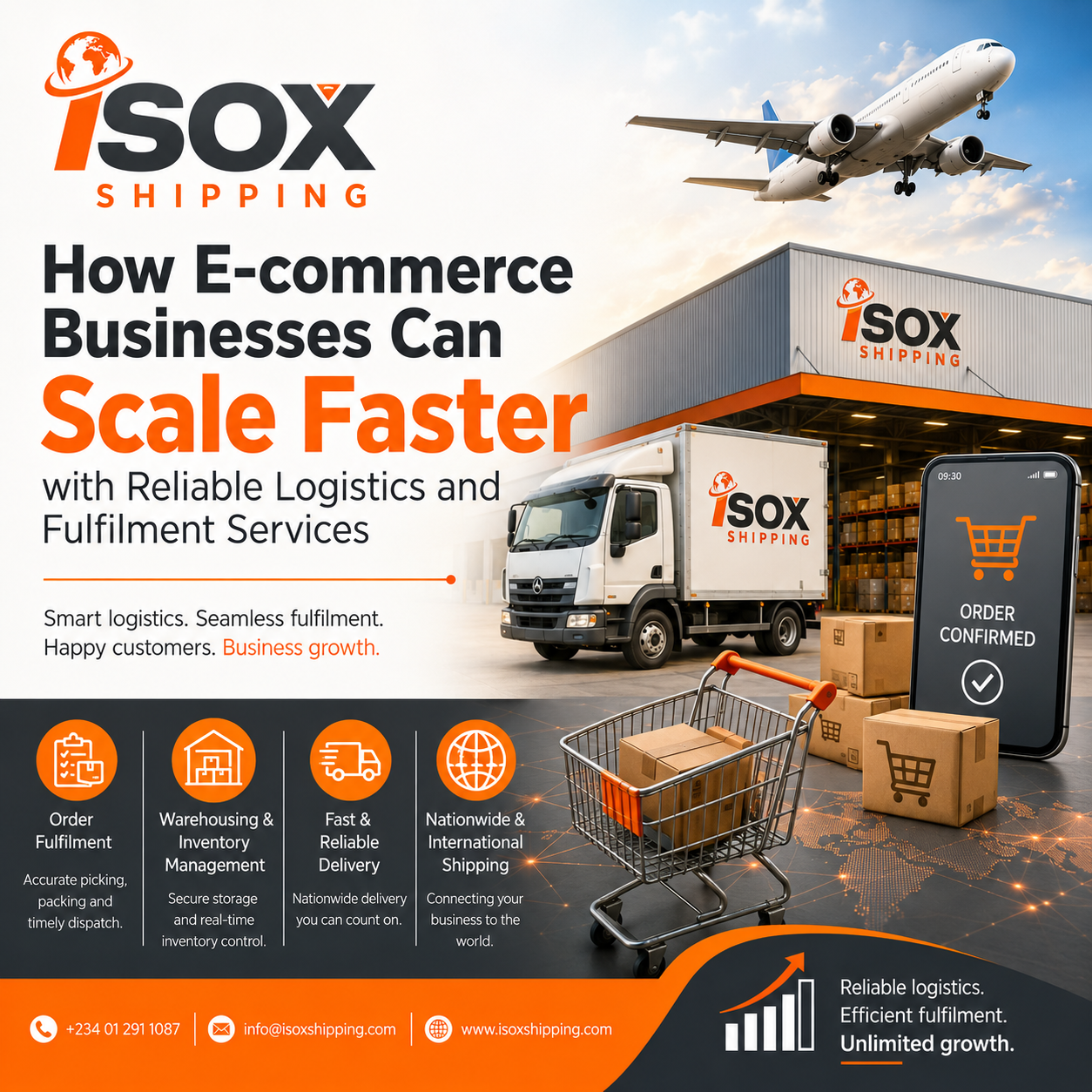
Scaling e-commerce with ISOX logistics
The difference between an e-commerce business that struggles and one that scales successfully often comes down to one critical factor: reliable logistics and fulfilment services.
Why Logistics Matters More Than Ever
Customers today expect convenience, transparency, and speed. They want their orders delivered accurately and on time, with clear communication throughout the process.
A delayed shipment or damaged package can negatively impact customer trust, resulting in poor reviews, cancelled orders, and lost repeat business.
For online retailers, logistics is no longer just a backend operation—it has become a major competitive advantage.
Businesses that invest in dependable logistics partners are better positioned to:
- Deliver products faster
- Reduce operational costs
- Improve customer satisfaction
- Increase repeat purchases
- Expand into new markets
- Focus on growing sales instead of managing logistics problems
Common Logistics Challenges Facing Nigerian E-commerce Businesses
Many online businesses encounter similar obstacles as they grow:
1. Inventory Management
Without proper warehousing systems, businesses often struggle with stock inaccuracies, misplaced inventory, and delayed order processing.
Efficient inventory management helps ensure products are available when customers need them while reducing unnecessary storage costs.
2. Delayed Deliveries
Late deliveries can damage a brand’s reputation and reduce customer loyalty.
Reliable logistics planning and professional shipping coordination help businesses meet delivery timelines consistently.
3. Rising Operational Costs
Managing transportation, storage, staff, packaging, and order fulfilment internally can become increasingly expensive.
Outsourcing logistics allows businesses to benefit from specialized expertise and economies of scale.
4. Returns Management
Returns are a natural part of e-commerce operations, but poorly managed return processes create additional costs and customer frustration.
An organized fulfilment system helps simplify reverse logistics while improving customer experience.
The Role of Professional Fulfilment Services
Fulfilment services involve much more than simply shipping products.
An integrated fulfilment solution can include:
- Inventory receiving
- Warehousing
- Stock management
- Order processing
- Packaging
- Shipping coordination
- Delivery tracking
- Returns handling
- Customer delivery support
By streamlining these operations, businesses can concentrate on marketing, customer acquisition, and product development.
How Reliable Logistics Accelerates Business Growth
Faster Customer Deliveries
Customers are more likely to purchase again when deliveries are fast and dependable.
Reliable fulfilment systems help businesses maintain service consistency even during high-demand periods.
Improved Customer Satisfaction
Positive delivery experiences directly influence customer reviews, referrals, and long-term loyalty.
Satisfied customers often become repeat buyers and brand advocates.
Business Scalability
As order volumes increase, manual processes become inefficient.
Professional logistics infrastructure allows businesses to scale without significantly increasing internal operational complexity.
Better Cost Efficiency
Outsourced logistics can reduce expenses associated with warehousing, transportation management, staffing, and infrastructure investment.
This enables businesses to allocate more resources toward growth initiatives.
Nationwide and International Expansion
Reliable logistics partners make it easier to serve customers across Nigeria while supporting cross-border trade opportunities and international shipping requirements.
Choosing the Right Logistics Partner
Selecting the right logistics and fulfilment provider is a strategic business decision.
When evaluating a logistics company, businesses should consider:
- Industry experience
- Nationwide delivery capabilities
- International shipping expertise
- Warehousing infrastructure
- Customs clearance capabilities
- Order tracking systems
- Customer support quality
- Reliability and transparency
- Scalability for future growth
The right partner should not only move products but also contribute to operational efficiency and business success.
How ISOX Shipping Supports E-commerce Growth
As businesses navigate increasingly competitive markets, having a dependable logistics partner becomes essential for sustainable growth.
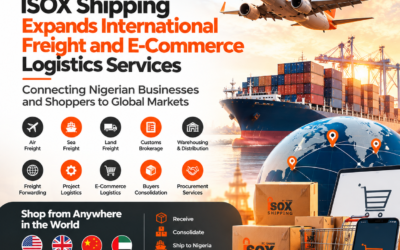
ISOX Shipping provides professional logistics solutions designed to support businesses of different sizes and industries. Through comprehensive freight forwarding, warehousing, customs brokerage, buyers consolidation, and fulfilment capabilities, businesses can simplify their supply chain while improving delivery performance and customer satisfaction.
Whether you’re an emerging online retailer or an established e-commerce brand expanding into new markets, partnering with an experienced logistics provider can help reduce complexity and create opportunities for long-term growth.
Final Thoughts
The future of e-commerce belongs to businesses that can consistently deliver exceptional customer experiences from checkout to final delivery.
Reliable logistics and fulfilment services are no longer optional—they are a strategic investment that drives customer trust, operational efficiency, and sustainable business expansion.
By partnering with experienced logistics providers like ISOX Shipping, Nigerian businesses can position themselves for faster growth, improved customer satisfaction, and greater competitiveness in an increasingly digital marketplace.