Importing goods into Nigeria can look straightforward when you only have to consider the supplier’s price and the shipping fee. The real cost usually becomes clear later, when customs duties, taxes, port charges, clearing fees, and inland transportation are added.
Getting this calculation right before placing an order can make the difference between having a profitable shipment and an unexpectedly expensive one.
This article aims to simplify this process and make it easier for you to calculate the cost of importing your goods, from the point of purchase down to your doorstep.
What Determines the Cost of Importing Goods Into Nigeria?
The final cost depends on the type and value of the goods, where they’re coming from, how they’re transported, their customs classification and where they’re delivered in Nigeria.
The main costs usually fall into these categories:
- Cost of the goods
- International freight
- Insurance
- Customs duty
- VAT and other applicable taxes or levies
- Customs clearance and documentation
- Port and terminal charges
- Demurrage or storage charges, where applicable
- Inland transportation
- Warehousing and handling
Some shipments may also require specific permits, inspections, certifications or regulatory approvals. These additional requirements can affect both the cost and the time it takes to clear the goods.
This is why looking at the supplier’s invoice or freight quotation alone doesn’t give you the true cost of importing.
How to Calculate the True Cost of Importing Goods Into Nigeria
Here is how you can accurately calculate the true cost of importing goods to Nigeria:
1. Start With the Cost of the Goods
The first and most obvious cost is what you pay the supplier.
If you buy 500 units of a product from a manufacturer in China for $20 per unit, the purchase value is:
500 × $20 = $10,000
That $10,000 is the actual cost of the goods, not the final cost.
This cost may vary based on the supplier’s quotation, which may include terms that align with your sales agreement. For example, the price may be quoted on an EXW, FOB, CIF, or another Incoterms (International Commercial Terms) basis.
These terms determine which party is responsible for different parts of the transportation process.
As an importer, you should therefore understand exactly what’s included in the supplier’s price before comparing quotations from different suppliers.
The reason is that a lower product price doesn’t necessarily mean a lower final import cost, especially if the buyer has to take on significantly more freight, handling or other charges.
For example, $5 per unit on EXW might be significantly more expensive than $8 on FOB, especially if you don’t have a trusted local who can handle local freight in the country you’re importing from.
2. International Shipping Costs
The next major expense is getting the goods from the country of origin to Nigeria.
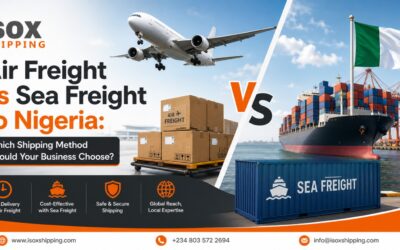
For most commercial shipments, the main options are air freight and sea freight.
Air freight is generally faster and is useful for urgent, lightweight, high-value or time-sensitive goods. The trade-off is that it usually costs more than transporting large volumes by sea.
Air freight charges may depend on the actual weight or volumetric weight of the shipment, depending on the cargo and carrier.
Sea freight, on the other hand, is commonly used for larger or heavier shipments because it can offer a more economical cost per unit when cargo is moved in sufficient volume.
The cost can depend on whether you are using a full container load or sharing container space with other shipments.
3. Insurance Can Add to the Cost
Cargo insurance is another cost most importers pay for when buying goods.
Your goods can be exposed to risks during transportation, including damage, loss or other unforeseen incidents. With good insurance coverage, you can take the risks off your shoulders.
The appropriate insurance arrangement depends on the shipment and the Incoterms agreement between you and the seller.
While insurance adds to the upfront cost, it can protect your business from absorbing the full financial impact of a significant loss.
4. Customs Duty Is One of the Biggest Variables
Customs duty is where many first-time importers experience challenges.
Nigeria uses tariff classification to determine the applicable duty on imported goods. The goods are assigned an HS code based on their characteristics and classification. That code determines the applicable tariff treatment and can also indicate whether additional restrictions, licences or regulatory requirements apply.
The Nigeria Customs Service’s current tariff portal lists duty rates under the ECOWAS Common External Tariff (CET). Depending on the classification, rates can fall under 0%, 5%, 10%, 20%, or 35%.
This means you can’t accurately estimate customs duty simply by knowing that you’re importing “electronics,” “clothing,” or “machinery.” The exact product and its correct HS classification matter.
5. VAT and Other Applicable Taxes
Most first-time importers get surprised when they learn there are taxes involved in the importation of goods. Knowing the taxes that apply to your goods is one of the first things you should learn as an importer.
Nigeria’s VAT rate for taxable supplies is 7.5%. Imported goods fall within the VAT framework unless they are specifically exempted under the relevant law.
The important point is that VAT shouldn’t simply be treated as another percentage added to the supplier’s invoice. The applicable customs valuation and other components of the import assessment need to be considered when calculating what is actually payable.
Depending on the product, there may also be other applicable levies, charges or regulatory requirements.
6. Customs Clearance and Documentation Costs
Once your goods have safely landed in Nigeria, what follows next is customs clearance and documentation.
The Nigeria Customs Service identifies several important documents and procedures involved in importation, including Form M, the Pre-Arrival Assessment Report and the Single Goods Declaration.
Other documents can include the commercial invoice, packing list and bill of lading or airway bill, depending on the shipment.
This is why most importers work with licensed customs agents to handle declarations, documentation, customs assessments and clearance. Because a mistake in documentation can lead to queries, additional assessments and delays. Those delays can create further costs through storage, demurrage and other charges.
7. Port and Terminal Charges
For sea shipments, the cost doesn’t stop once the vessel arrives at a Nigerian port.
Depending on the shipment and port, an importer may encounter various terminal, handling, documentation and related charges before the cargo can be released.
These charges vary according to factors such as the type of cargo, terminal, container arrangement and how long the cargo remains within the relevant facility.
This is one reason as an importer, you should request a comprehensive cost estimate from your customs agents, as it helps you to accurately determine the cost of shipping from any country to Nigeria.
8. Demurrage, Storage and Detention Can Increase Your Bill
As an importer, these are the costs you should try hard to avoid.
If cargo or containers remain at a port or terminal beyond the permitted period, additional charges can arise. Depending on the circumstances, these may include demurrage, storage or detention charges.
Delays can happen for different reasons. Documentation problems, customs queries, inspections, incomplete payments and operational issues can all contribute.
This is where proper preparation becomes financially important.
Having the required documentation ready, confirming the correct customs classification and working with experienced logistics professionals can help reduce avoidable delays.
9. Inland Transportation Matters Too
Once the goods have cleared customs, they still need to reach their final destination.
This means the transportation from the port to your warehouse, shop or distribution centre. If you’re in Lagos, this becomes a bit easier and cheaper. However, if you’re in another part of the country, transportation costs depend on who you hire to deliver the goods to your location.
10. Warehousing and Handling Costs
If you need a warehouse to temporarily keep your goods before sending them to your shops, you might consider factoring warehousing costs into your import estimates.
Some businesses need temporary storage before distributing their inventory. Others may need their goods consolidated, sorted, repackaged or prepared for onward delivery.
Warehousing can therefore become part of the overall import cost.
The amount depends on how much space is required, how long the goods remain in storage and what handling services are involved.
How to Estimate Your Import Cost Before Shipping
The safest approach is to build the estimate from the individual components.
Start with:
- Product cost
- Freight cost
- Insurance
- Customs valuation
- Applicable customs duty
- VAT and other applicable taxes or levies
- Customs clearance and documentation
- Port and terminal charges
- Storage or demurrage, if applicable
- Inland transportation
- Warehousing and handling
Then add them together to arrive at an estimated landed cost.
You can use the Nigeria Customs Service’s current tariff platform to check HS classifications and applicable tariff information. Do this every time you want to make an import, as the Nigeria Customs Service warns that tariff classifications and rates can change.
For larger or more complicated shipments, getting a professional cost assessment before placing the order can be much safer than trying to work everything out after the cargo has arrived.
Here’s a simple example to help you better understand the calculations:
Let’s say you purchased goods worth $10,000 from an overseas supplier. Your total expenses would be:
- Goods: $10,000
- International freight: $1,500
- Insurance: $100
- Customs duty: maybe $1,000 (10%, depends on the HS classification)
- VAT: $750 (applicable based on the relevant tax rules)
- Customs clearance: $700 (applicable service and processing costs)
- Port and terminal charges: $700 (applicable charges)
- Inland delivery: $300 (applicable transportation cost)
The total amount spent to get those goods into your warehouse will therefore be around $15,050, which is considerably higher than the original $10,000 purchase price.
This is what you should think of as the landed cost, not the actual cost of the goods paid to the supplier.
Note: There is no single percentage that can be safely applied to every shipment because customs classification, valuation, freight, taxes and local charges vary from one consignment to another.
Why Working With a Freight Forwarder Can Make a Difference
Importing into Nigeria involves more than moving cargo from one country to another. There are suppliers, carriers, customs authorities, terminals, regulatory agencies, transporters and warehouses involved in the process.
A freight forwarding company can coordinate these different stages and give the importer a clearer picture of the total logistics cost before the shipment moves.
ISOX Shipping, for example, provides freight forwarding, air freight, sea freight, land freight, customs brokerage, warehousing, buyer consolidation and project logistics services. Its customs brokerage service is designed to support importers from pre-shipment formalities through the clearance process.
For a business importing regularly, having one logistics partner coordinate multiple parts of the supply chain can make budgeting easier and reduce the risk of costs appearing unexpectedly during the shipment.
Conclusion
The cost of importing goods into Nigeria depends on far more than the price paid to an overseas supplier. Freight, customs duty, taxes, clearance, port charges, transportation, warehousing and other expenses can all affect the final amount.
The best time to calculate these costs is before you place the order. A clear landed-cost estimate gives you a better idea of your actual profit margin and helps you decide whether a shipment makes financial sense in the first place.
For businesses that want to avoid surprises, working with an experienced logistics provider can also make the process easier. With the right planning and accurate information, importers can make better purchasing decisions and keep their logistics costs under control.